
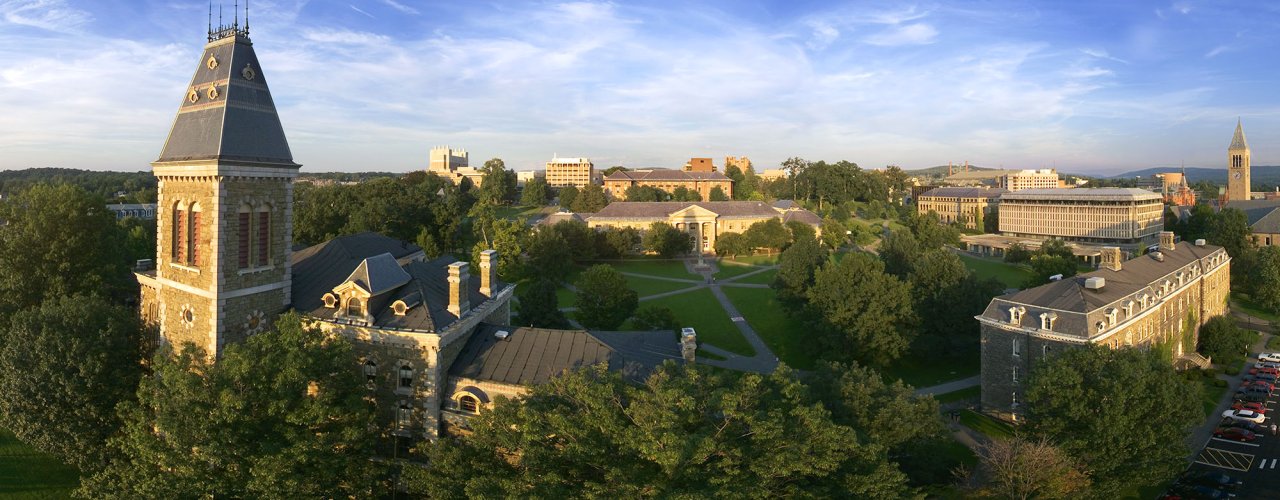
Imperial Global Fellows Complete Summer Research at Cornell
Imperial Global Fellows—PhD students from Imperial College London—partnered with Cornell faculty to work on summer research on the Cornell Ithaca campus and at Weill Cornell Medicine in New York City.
Owen Brook
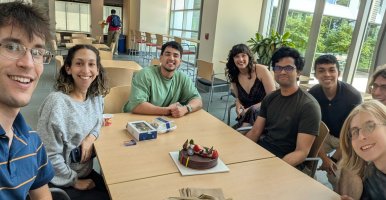
At Cornell, Owen Brook began working on a new project to control a simple model of a bipedal robot in the lab of Anastasia Bizyaeva from the Sibley School of Mechanical and Aerospace Engineering. Their approach involved simulating small numbers of neurons that work together and feeding back sensory events like foot impact to drive the robot forward at different speeds.
“It was my first time properly visiting the U.S. and I received such a warm welcome, making many friends during my short stay. The environment at Cornell was particularly interdisciplinary and so I was exposed to a huge breath of topics, from labor relations to wearable robotics. This really encouraged me to collaborate and reach out to academics from different fields, both at Cornell and back at Imperial College.”
Kirsty Moane
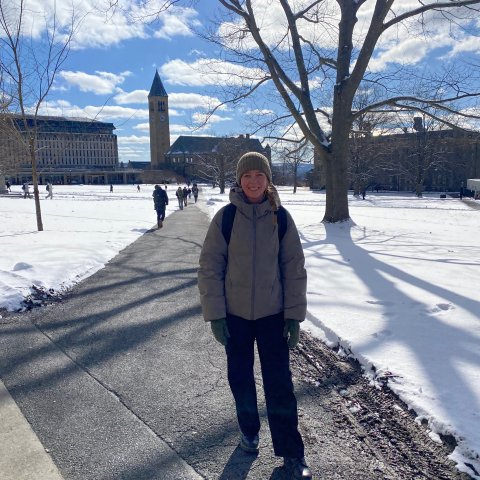
Kirsty Moane worked with Nicolas Buchon in the Department of Entomology this summer, studying the Drosophila melanogaster—a species of fly—to see how hormonal signaling regulates immune responses in the gut.
Moane will apply her experiences to her PhD research on mosquito midgut immunity.
“My time at Cornell was an incredibly rewarding experience that expanded both my scientific knowledge and professional network. Learning new techniques and approaches has directly benefited my PhD project, while exposure to different perspectives in insect immunity research has inspired new ideas and directions for my future career.”
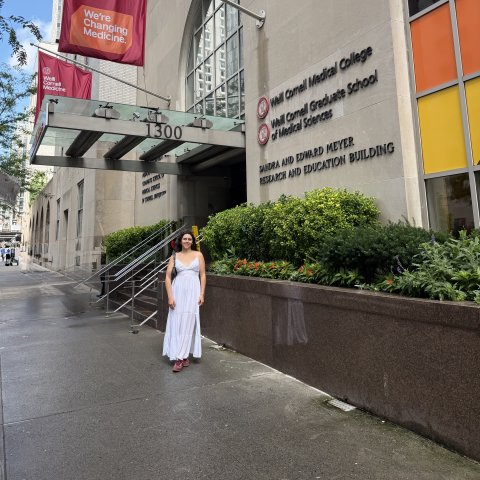
Sara Sousi
At Weill Cornell Medicine this summer, Sara Sousi worked with Yiye Zhang in the Department of Population Health Sciences.
They collaborated on a study about GLP-1 medications effects on conception and pregnancy, using large-scale electronic health record data. The project complements Sousi's doctoral research at Imperial, which applies machine learning and causal inference to linked National Health Service records to evaluate digital models of prenatal care.
“What made my time at Weill Cornell unique was seeing clinical decision support being built directly on live hospital data. I’m leaving with a much stronger understanding of how the same research questions can look very different across health systems, a clearer sense of what it takes to translate prediction models into tools that clinicians can use, and collaborations that I’m excited to continue from London."
Scott Tytheridge
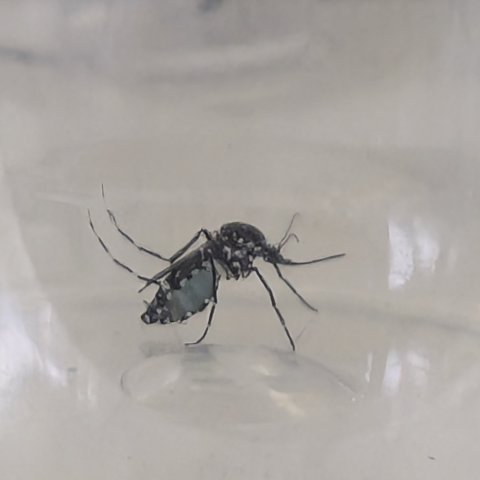
Scott Tytheridge is a PhD student studying entomology. Working with the Harrington lab in the Department of Entomology, he learned techniques to study mosquito behavioral ecology and insecticide resistance.
One experiment he conducted involved feeding female mosquitoes sugar and measuring the quantity of sugar consumed.
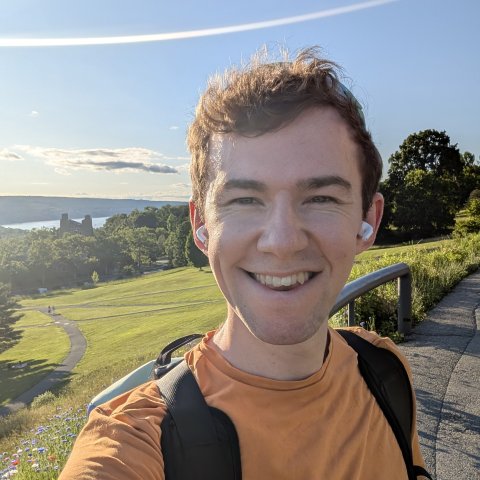
“I loved being able to visit and discuss so much entomology in one place at Comstock Hall, including potential postdocs. I don't really have that at Imperial. The value in this placement was in experiencing a vastly different and exciting space that hosts talented and experienced researchers with skills that I can directly apply to answer questions in my PhD chapters.”
Isobel Jackson
Isobel Jackson worked with Rulla Tamimi from the Department of Population Health Sciences at Weill Cornell to study how increased physical activity and breast cancer survival rates are linked. She examined breast tumor tissue and its differential gene expression in association with pre-diagnostic physical activity.
“It was really exciting to spend this summer at Cornell and working with Professor Tamimi was a fantastic opportunity. This placement gave me my first real experience of the field, and it has strengthened my plan to pursue molecular epidemiology for cancer research in a postdoc after my PhD. I would love the chance to return to Cornell at some point in the future.”
Yunxiang Yang
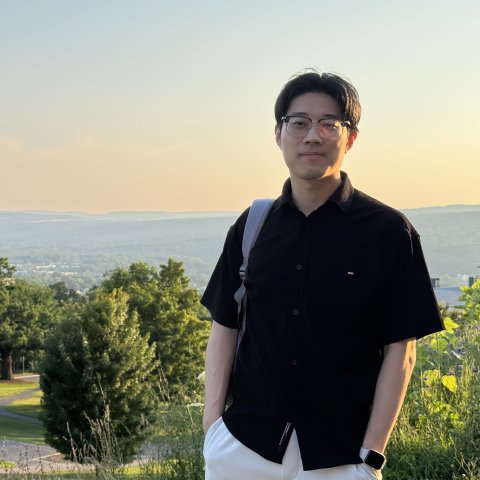
Yunxiang Yang conducted research with Dan Kowal from Cornell's Department of Statistics and Data Science. Their project explored different Bayesian modeling techniques for geotechnical parameter characterisation and probabilistic inverse problems. The broader aim was to support computational modeling in geotechnical engineering.
“The project gave me the opportunity to deepen my knowledge of modern Bayesian methods. Although Bayesian modeling is increasingly used across many engineering disciplines, its application in geotechnical engineering is still relatively limited. My experience at Cornell also helped me build a more rigorous understanding of Bayesian statistics from a statistical perspective."